
TCO Analysis for Vehicle Fleets: Understanding Total Cost of Ownership and Sustainably Reducing Fleet Costs
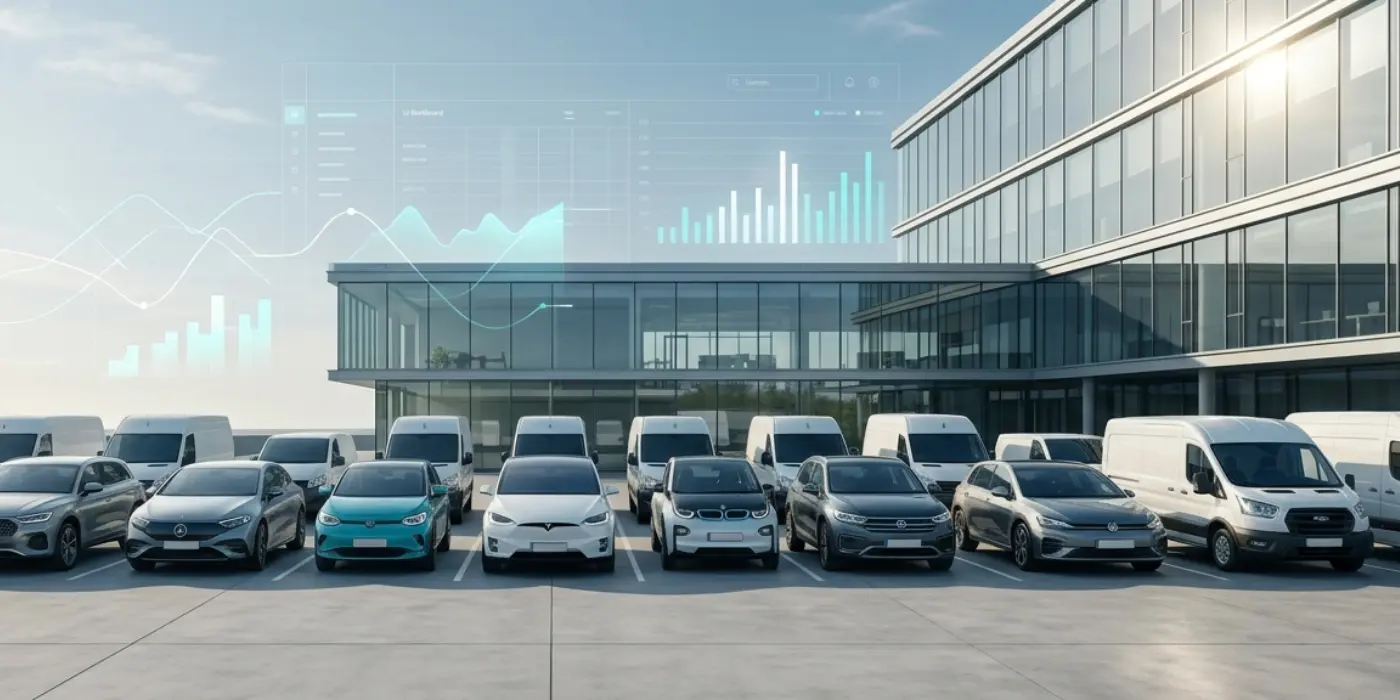
Instead, effective management of corporate mobility requires a comprehensive analysis of total costs over the entire period of use—the Total Cost of Ownership (TCO).
A professional TCO analysis in fleet management lays the foundation for informed decisions regarding vehicle procurement, leasing, electrification, and cost control. Companies that transparently track their fleet’s total operating costs can identify hidden costs, reduce their fleet expenses ›, and improve the long-term cost-effectiveness of each individual vehicle.
In this article, you’ll learn:
- What a TCO analysis does for a fleet and why it’s the most important metric for cost-effective fleet management ›
- Which direct and indirect costs are included in the Total Cost of Ownership ›
- Which hidden costs are often overlooked in many fleets ›
- Why data silos make a reliable TCO analysis difficult ›
- How companies use TCO as a management and forecasting tool ›
- Which data sources are essential for an accurate TCO calculation ›
- What measures can be taken to reduce the Total Cost of Ownership in the long term ›
- What software supports you in ongoing TCO analysis ›
- FAQ – Answers to common questions about TCO analysis ›
TCO Analysis: Fleet Management Costs per Vehicle as a Key Performance Indicator
For many companies, a robust fleet management cost analysis begins at the individual vehicle level. Only once the actual fleet management costs per vehicle are known can locations, vehicle classes, leasing models, or powertrain types be objectively compared.
The challenge, however, lies not in the calculation but in data aggregation. Most companies already have the majority of the necessary cost data—but they lack suitable systems to consolidate dispersed information from leasing, repair shop, fuel card, ERP, and telematics systems. This is precisely where the greatest loss of transparency occurs within modern fleets.
Why an Isolated Cost Analysis in Fleet Management Leads to Poor Decisions
A holistic TCO analysis moves beyond a focus on pure acquisition costs. Instead, it captures all cost streams that arise over the entire life cycle of a vehicle—from the initial configuration through the operational use phase to the final decommissioning and remarketing.
In this context, strategic controlling distinguishes between two types of costs:
Direct Costs
These include purchase, leasing, fuel, maintenance, insurance, and other directly attributable vehicle costs.
Indirect Costs
These include administrative expenses, process inefficiencies, downtime, and other costs that must be allocated indirectly to multiple vehicles using an allocation formula.
Transparent allocation and consistent categorization into fixed costs and variable operating costs form the basis for making sound investment decisions and for providing a robust foundation for reporting structures to management and the finance department.
The Complete Cost Matrix: Costs That Remain Hidden in Many Fleets
To achieve maximum marketability and meaningfulness, a TCO calculation must have no gaps. The reality of modern mobility structures requires expanding traditional cost categories to include variables that have often been ignored in the past.
1. The Traditional Core Components
| Cost Category | Strategic Core Factors and Drivers |
| Purchase & Depreciation | Actual loss in value, taking into account age, wear and tear, and the projected resale proceeds (residual value risk). |
| Fuel & Energy Costs | Variable expenses for diesel, gasoline, or electricity (kWh), significantly influenced by the specific consumption profile. |
| Maintenance & Repair | Scheduled inspections according to manufacturer specifications combined with statistically expected, unscheduled wear-and-tear repairs and spare parts purchases. |
| Insurance & Taxes | Automobile liability insurance, comprehensive coverage, framework agreements, as well as the statutory motor vehicle tax and any state-specific surcharges. |
2. The Often-Overlooked Blind Spots of TCO
Costs that are usually missing from standard Excel spreadsheets, however, include:
- Downtime and productivity losses
- Infrastructure expenses associated with drive system changes
- Legal compliance & driver training
- End-of-life and disposal costs
- Environmental and social costs
In practice, it is often precisely these indirect cost areas that determine the actual cost-effectiveness of a fleet. While direct vehicle costs are usually well documented, process costs, downtime, and administrative expenses remain largely invisible in many organizations—even though they have a significant impact on total cost of ownership.
Why TCO Analysis Is Now a Decisive Factor in Market Share
The importance of continuous cost monitoring has increased in recent years. Nevertheless, according to the Dataforce Fleet Management Study ›, only 40% of the fleets surveyed had established clear, regular TCO monitoring by 2024.
Lack of transparency becomes a competitive disadvantage: The ongoing mobility transition, volatile energy and fuel prices, and the immense administrative pressure from European security and reporting directives (such as NIS2 › or DORA ›) are forcing companies to implement seamless process automation. Fragmented data silos—such as those created by the use of fuel card-only portals or isolated standalone solutions—no longer provide a viable foundation for this.
Why Data Silos Are the Biggest Obstacle to a Valid TCO Analysis
Most fleets today already have sufficient data for a reliable TCO analysis. The real problem rarely lies in data collection, but rather in the distribution of this information across different systems, service providers, and data sources.
 Leasing costs, fuel data, repair invoices, telematics information, and administrative processes are often viewed in isolation. This results in data disconnects, manual reconciliation efforts, and inconsistencies that not only compromise data quality but also limit the comparability and manageability of actual fleet costs.
Small fleets may be able to achieve a rudimentary overview in their early stages using manual Excel templates or simple online calculators. However, as soon as a fleet reaches a critical size, this manual management inevitably reaches its functional and regulatory limits.
The larger the fleet becomes, the more these data silos themselves become an economic factor—not due to additional vehicle costs, but because of increasing complexity, higher administrative overhead, and delayed decision-making processes.
The key difference, therefore, does not stem from the availability of individual data sources, but rather from their intelligent integration. Companies that centrally consolidate and automatically analyze operational mobility data lay the foundation for reliable cost forecasts, early detection of deviations, and faster management decisions.
From Key Metric to Management and Forecasting Tool
Simply calculating the Total Cost of Ownership (TCO) already provides transparency regarding the costs of a vehicle or an entire fleet. However, the true added value lies in the interpretation of these figures. A TCO of, for example, 0.55 euros per kilometer is, when viewed in isolation, merely a metric—what matters is how it compares to historical values, target ranges, and similar vehicle groups.
TCO is therefore not primarily a reporting tool, but rather a management tool for operational and strategic decisions. Only the systematic comparison of actual, target, and reference values makes economic deviations visible and manageable.
A TCO that is higher than the target is a symptom of an underlying operational or organizational inefficiency. Analyzing the causes often yields more valuable insights than the metric itself.
TCO as an Early Warning System for Operational Risks
Those who continuously analyze TCO can identify not only cost structures but also operational trends at an early stage. Recurring discrepancies between planned and actual costs are rarely coincidental—they are indicators of structural weaknesses in fleet management.
Typical TCO warning signs and what they indicate:
| Observation | Possible Cause |
| Above-average energy costs | Inappropriate vehicle usage, unsuitable tires, or inefficient charging or refueling strategies |
| Rising repair costs | Vehicles prone to wear and tear or lack of maintenance oversight |
| High downtime | Process issues in scheduling, repair shop management, or claims management |
| Increased leasing costs | Unfavorable contract terms or incorrect lease terms |
| Above-average administrative costs | Data silos and manual processes |
| High residual value losses | Incorrect replacement timing or unsuitable vehicle configuration / car policy |
TCO thus acts as an economic early-warning system: It not only shows that costs are rising but—when viewed with the necessary granularity—also reveals where the root cause lies within the system.
From Historical to Projected TCO
Another misconception is to view TCO exclusively as a retrospective metric. In fact, most strategic decisions are made based on future costs.
Historical TCO answers the question:
“What did a vehicle actually cost?”
For investment decisions, however, a different question is often crucial:
“What will a vehicle cost in the future?”
Modern fleet management therefore combines historical cost data with forecasting models. On this basis, different scenarios can be simulated and evaluated from an economic perspective.
Typical questions include:
- Should a vehicle be replaced early or used for a longer period?
- Is leasing or purchasing more economical?
- When is the optimal time to replace a vehicle?
- What impact do rising energy prices have?
- At what point does electric mobility become more economically attractive than a combustion engine vehicle?
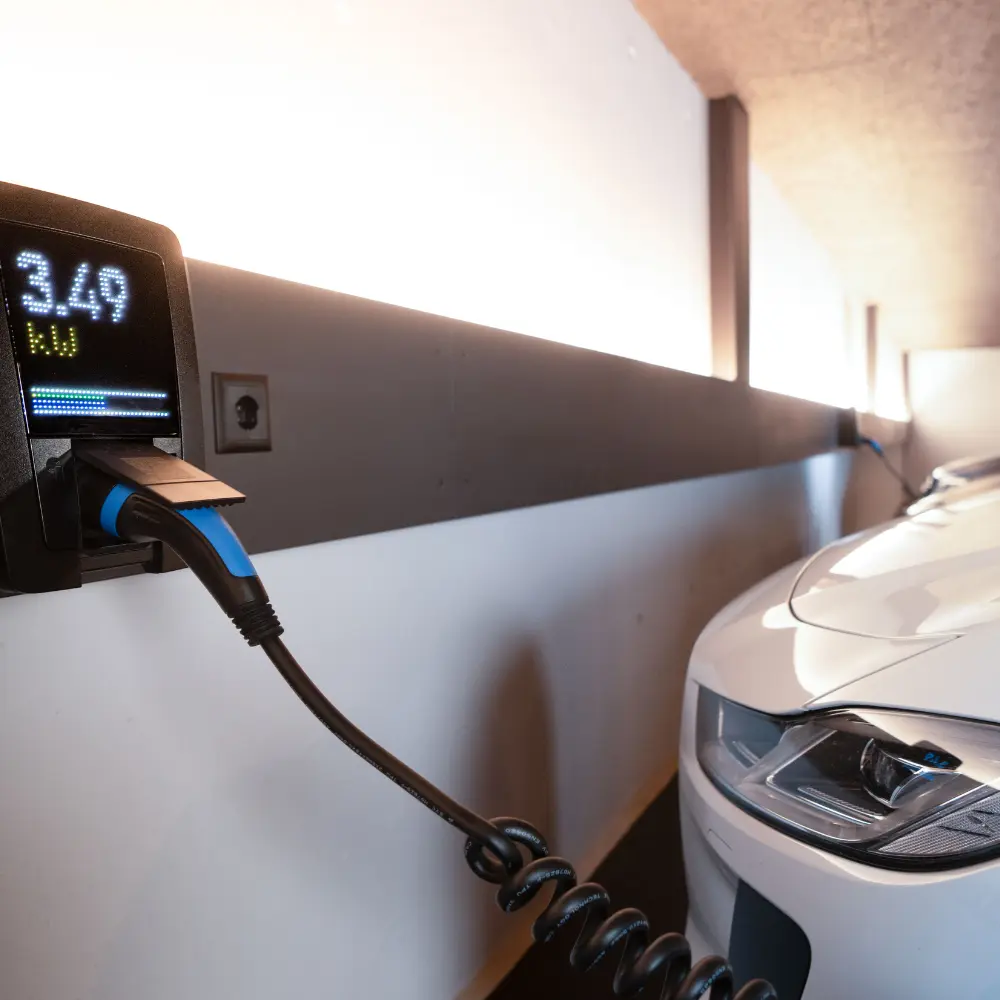 Particularly in the transition to electric mobility, it becomes clear that today’s individual costs are not very meaningful. What matters is the trend over the entire useful life—influenced by energy prices, residual values, maintenance costs, and the extent to which infrastructure investments (building a proprietary charging infrastructure, charging planning, and management) are allocated to the TCO of individual vehicles.
Furthermore, the cost-effectiveness of electric vehicles depends heavily on actual charging behavior. In practice, three basic charging scenarios are distinguished:
| Charging Scenario | Economic Impact |
| Charging at the company’s location | Typically the lowest energy costs and the highest predictability |
| Charging at home | Moderate costs with additional administrative billing effort |
| Public charging | Often the highest costs and the greatest price volatility |
As a result, two technically identical vehicles can have significantly different TCOs over their useful life. Anyone who wants to realistically assess the cost-effectiveness of electric mobility must therefore consistently factor actual charging behavior into their calculations.
Those who view TCO merely as a mathematical model fail to recognize its true value: It provides the data foundation for well-informed business decisions.
How transparent are your actual fleet costs?
Many companies already track fuel, leasing, and maintenance costs separately. However, the greatest opportunities for improvement lie in systematically linking indirect costs, downtime, and administrative processes.
Are you reaching your limits in this area? Then let’s talk about your system landscape. › We’ll show you the impact an integrated platform can have on your fleet.
Which data sources are essential for a reliable TCO calculation
 For a reliable TCO analysis, at least the following data sources should be taken into account:
- Purchase or leasing costs
- Fuel or energy costs
- Maintenance and repair costs
- Tire costs
- Insurance and taxes
- Claims management ›
- Administrative costs
- Downtime
- Residual values and resale proceeds
The more comprehensive the data set, the more accurately TCO optimization can be assessed.
The Core Mathematical TCO Formula for Fleet Management
Although cost categories and contract structures may vary from fleet to fleet, the following formula generally applies to TCO calculations:
TCO = Acquisition costs + Energy costs + Tire costs + Maintenance costs + Damage costs + Administrative costs – Resale proceeds
Practical note: All cash flows must be summed over the exact useful life and adjusted for the realized proceeds at the end of the term.
Deep Dive: Three Critical Cost Drivers in the Experts’ Focus
A) E-Mobility vs. Internal Combustion Engines: The Crux of Charging Costs
Electric vehicles generally have higher initial acquisition costs but excel in terms of reduced ongoing operating costs, as they contain fewer components prone to wear and tear.
Particularly in the commercial vehicle sector, considering the total cost of ownership (TCO) of trucks › is becoming increasingly important. Due to high mileage, factors such as energy consumption, tire management, repair costs, and downtime have a significantly greater impact on cost-effectiveness than in traditional passenger car fleets.
However, the final payback period depends significantly on a factor that standard calculators completely ignore: differentiated charging behavior. Whether vehicles are charged primarily at the company’s location, at home, or at public charging stations—and at what rates—can have a substantial impact on the actual TCO.
B) Lease Agreements: Pitfalls in the Fine Print
Simply comparing finance lease payments is not enough. Professional fleet management establishes a rigorous lease benchmarking process to uncover hidden costs in the general terms and conditions (GTC) and framework agreements.
Particular attention should be paid to the per-cent rates for excess and shortfall kilometers, processing fees for contract amendments, and the lessors’ specific return policies at the end of the term. Significant risk premiums are often hidden in standardized service flat rates.
Large fleets often operate much more economically when they rely on transparent actual-cost billing. Modern enterprise software such as comm.fleet › automates this process: Incoming repair shop and service invoices are electronically and fully automatically checked for plausibility against stored manufacturer labor rates and parts catalogs. This allows miscalculations, duplicates, and inflated costs to be identified immediately without any manual effort.
C) Tire Costs: The Underestimated Lever per Kilometer
Although the purchase of tires statistically often accounts for only about 5% of the direct TCO, they serve as a massive lever for two of the largest budget items: fuel consumption and unplanned downtime.
Read more about tire management in fleet operations in our blog post ›
Strategic Optimization Measures to Reduce TCO
To sustainably reduce the total cost of ownership, companies should systematically manage the key cost drivers. The greatest opportunities for savings often lie not in individual vehicles, but in procurement, operational, and management processes.
Strategic Leverage with a Direct Impact on TCO:
| Lever | Impact on TCO |
| Vehicle Selection and Car Policy | Prevents over-motorization and reduces risks related to acquisition, energy, and residual value |
| Tire Strategy and Condition Monitoring | Reduces fuel consumption, wear-and-tear costs, and unplanned downtime |
| Fueling and Charging Behavior | Reduces energy costs and increases the cost-effectiveness of electric fleets |
| Maintenance and Workshop Management | Prevents consequential damage and reduces downtime costs |
| Vehicle Deployment | Optimizes replacement timing and minimizes residual value losses |
| Leasing and Contract Management | Avoids hidden costs and improves cost prediction accuracy |
| Use of Telematics Data | Identifies inefficient usage patterns and opportunities for optimization |
| Process automation | Reduces administrative overhead and error-related costs |
| Data integration and reporting | Provides transparency for informed decision-making and benchmarking |
Let’s talk about your TCO potential!
Would you like to know where costs are actually incurred in your fleet—and how you can sustainably reduce them through seamless process automation? Our fleet experts will work with you to analyze your current software landscape.
During a no-obligation initial consultation, we’ll show you:
- How to digitally map all of your fleet’s cost structures without any data disconnects.
- How to fully automate the aggregation of fleet management costs per vehicle in real time.
- How to eliminate interface risks and gain complete control over data for passenger car and truck fleets.
- How to automatically identify hidden cost sources.
- How to leverage TCO data for management reporting and strategic decision-making.
Request a no-obligation consultation now and secure your technological edge. ›